The immune system exists in an intricate balance. Inappropriate response to the body's own antigens leads to autoimmunity. In contrast, lack of appropriate response to foreign invaders results in immunodeficiency. The thymus plays a key role in establishing this balance by presenting the body's self-antigens to developing T cells in a process called central tolerance induction.
The Meyer lab studies how the organisation of the thymus and the cells therein contribute to successful T cell development leading to a competent immune system with adequate effector function. Our work spans thymic epithelial cells that educate developing T cells, the thymocytes that respond to this education, the selection process that shapes a self-tolerant repertoire, and the computational tools that help us dissect these processes.
Thymic epithelial cells – T cell educators
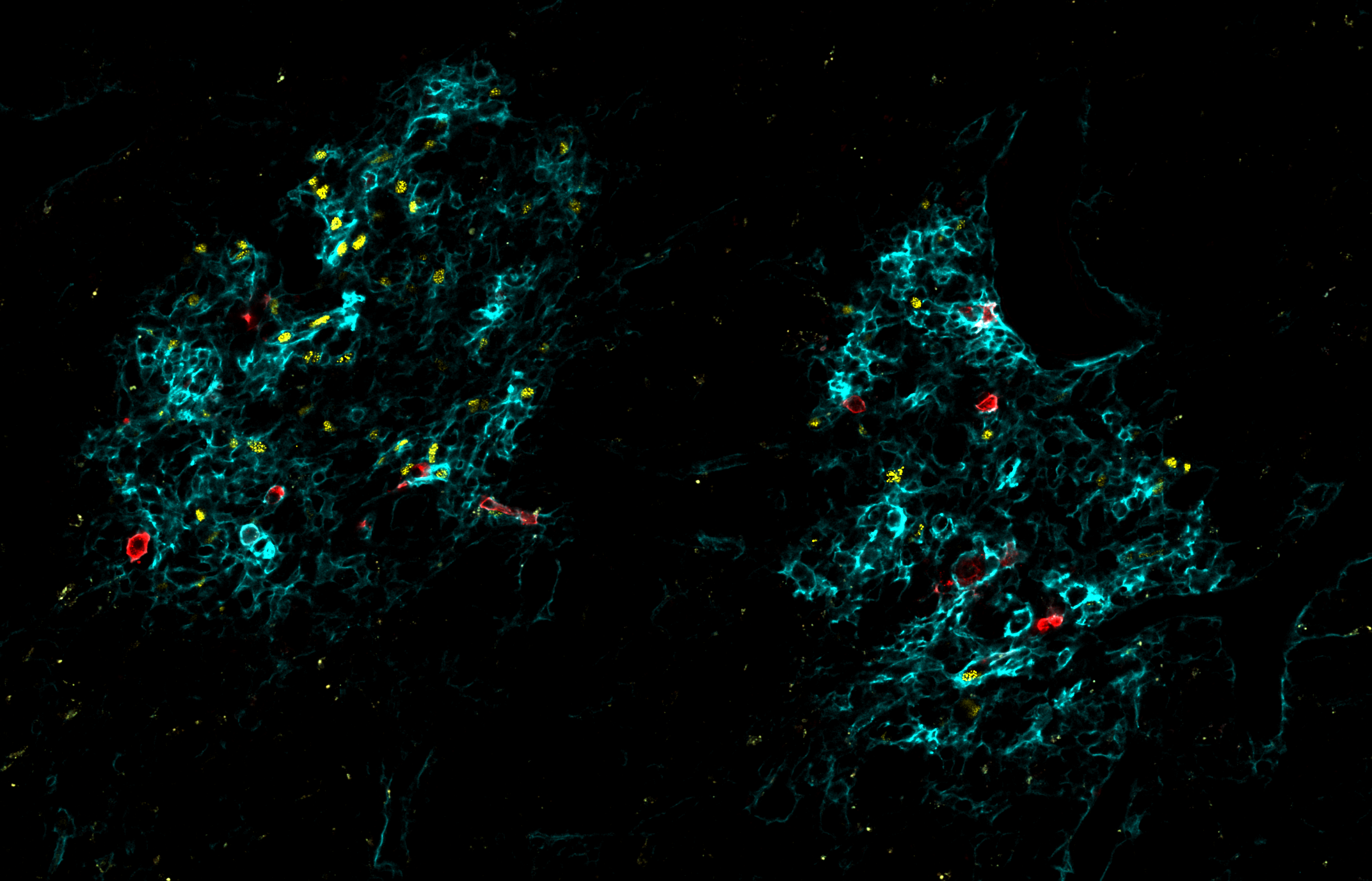
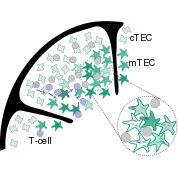
Thymic epithelial cells (TECs) drive central tolerance induction by presenting self-antigens to developing T cells, shaping a repertoire that can respond to foreign threats while remaining tolerant to the body's own tissues.
We study how thymic gene expression is regulated in human and mouse thymus, from the molecular to the tissue scale. Using single-cell transcriptomics, we have uncovered extensive heterogeneity among human mTECs and the regulatory programmes that shape the antigen space available for T cell education.
Key publications
Carter JA, Strömich L, Peacey M, Chapin SR, Velten L, Steinmetz LM, Brors B, Pinto S & Meyer HV (2022) Transcriptomic diversity in human medullary thymic epithelial cells, Nature Communications, 13:429
Rattay K, Meyer HV, Herrmann C, Brors B, Kyewski B (2015) Evolutionary conserved gene co-expression drives generation of self-antigen diversity in medullary thymic epithelial cells, Journal of Autoimmunity, 67:65-75
T cells, TCRs and repertoires
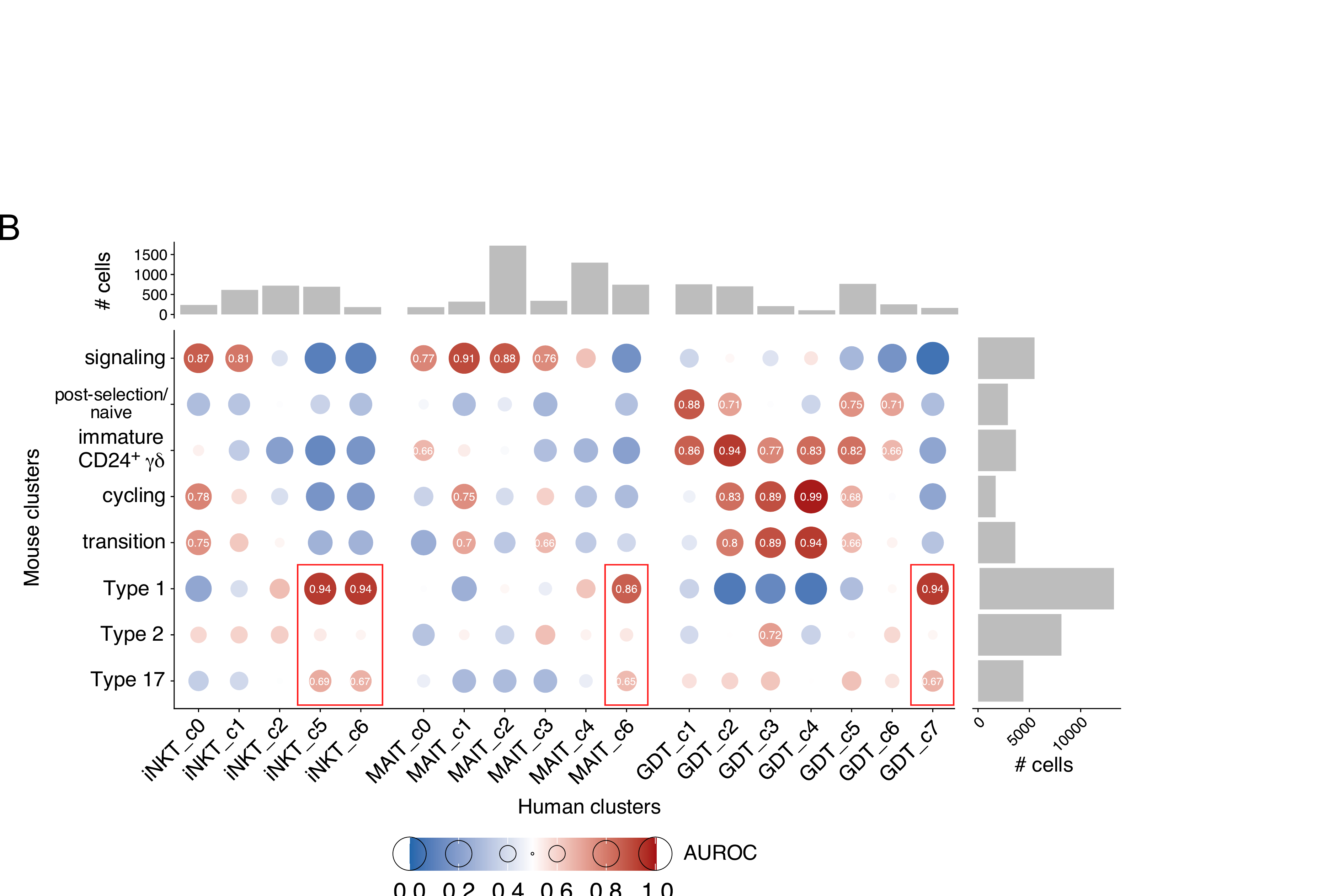
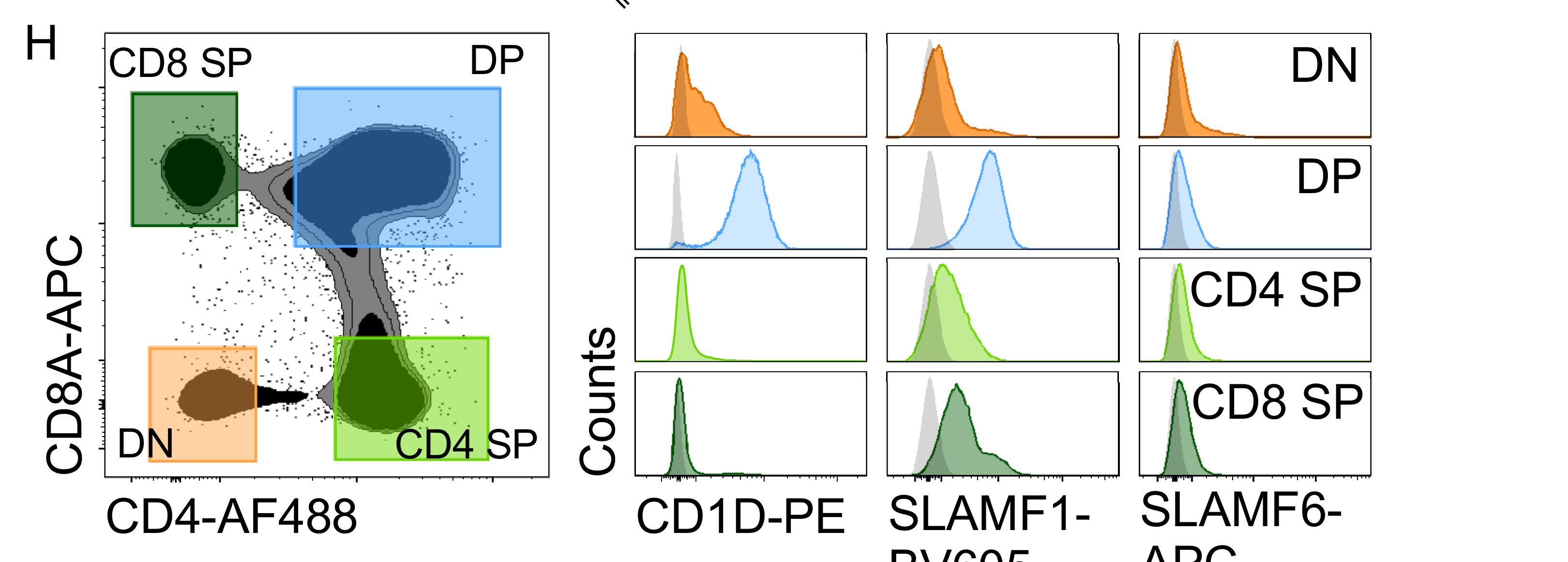
T cell development in the thymus generates T cells with highly specific, yet diverse T cell receptors (TCRs), then selects clones whose TCRs recognise antigen without reacting strongly to self. The resulting T cell pool spans conventional and innate-like lineages and underpins adaptive immune recognition throughout life.
Combining experimental and high-throughput sequencing approaches, we study the drivers that shape T cell development, differentiation, and the properties of their TCRs.
Key publications
Loh L, Carcy S, Krovi HS, Domenico J, Spengler A, Lin Y, Torres J, Prabakar RK, Palmer W, Norman PJ, Stone M, Brunetti T, Meyer HV*, Gapin L* (2024) Unraveling the Phenotypic States of Human innate-like T Cells: Comparative Insights with Conventional T Cells and Mouse Models, Cell Reports, 43:114705
Banerjee A, Pattinson DJ, Wincek CL, Bunk P, Axhemi A, Chapin SR, Navlakha S*, Meyer HV* (2025) T cell receptor cross-reactivity prediction improved by a comprehensive epitope mutation effect database, Cell Systems, 16:101345
Kovaleva VA, Pattinson DJ, Barton C, Chapin SR, Minervina AA, Richards KA, Sant AJ, Thomas PG*, Pogorelyy MV*, Meyer HV* (2025) Identification of Antigen-Specific T Cell Receptors with combinatorial peptide pooling, bioRxiv, 10.1101/2023.11.28.569052 (in revision)
Thymic selection
Although the stages and key molecular players of thymic selection are well described, how they integrate quantitatively to achieve immune balance remains unclear.
We build in silico models of the thymus that explicitly capture the interactions between T cells and thymic epithelial cells. Our recent work shows that sparse, random sampling of self-antigens is sufficient for robust central tolerance, challenging assumptions about how comprehensively the thymus must survey the self.
Key publications
Meyer HV*, Dasgupta S, Banerjee A, Lin Y, Prabakar R, Chapin SR, Kingsford C, Navlakha S* (2025) Central T cell tolerance from sparse peptide sampling, Science Advances, 12:eaeg8240
Tool development
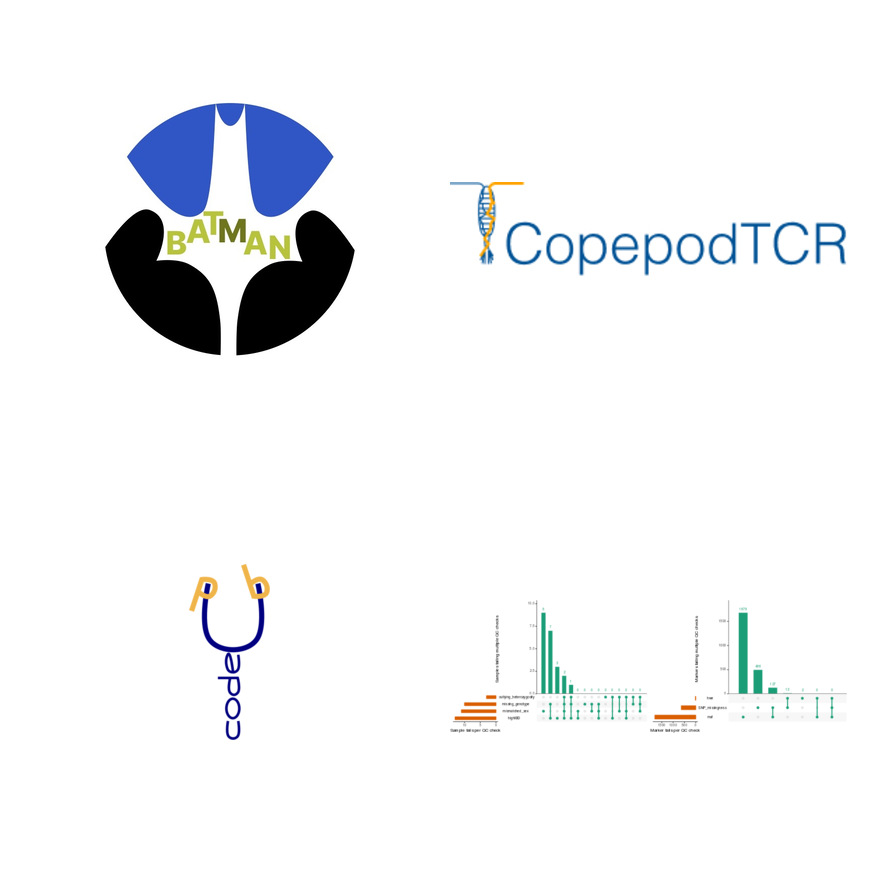
Answering questions in thymus biology and immunology increasingly requires bespoke computational methods. We develop open-source approaches that make complex data easier to design, analyse, and interpret, with an emphasis on reusable tools that connect experimental and computational biology.
Key publications
Banerjee A, Pattinson DJ, Wincek CL, Bunk P, Axhemi A, Chapin SR, Navlakha S*, Meyer HV* (2025) T cell receptor cross-reactivity prediction improved by a comprehensive epitope mutation effect database, Cell Systems, 16:101345
Kovaleva VA, Pattinson DJ, Barton C, Chapin SR, Minervina AA, Richards KA, Sant AJ, Thomas PG*, Pogorelyy MV*, Meyer HV* (2025) Identification of Antigen-Specific T Cell Receptors with combinatorial peptide pooling, bioRxiv, 10.1101/2023.11.28.569052 (in revision)
He G#, Kovaleva VA#, Barton C, Thomas PG, Pogorelyy MV, Meyer HV*, Huang Q* (2025) Unbiased and Error-Detecting Combinatorial Pooling Experiments with Balanced Constant-Weight Gray Codes for Consecutive Positives Detection, Bioinformatics, btaf611
Syed M, Walter C, Meyer HV (2026) plinkQC: An Integrated Tool for Ancestry Inference, Sample Selection, and Quality Control in Population Genetics, Bioinformatics, 42:btag612